Pacemaker
A Radivive glossary entry. Scroll down for a plain-language definition and related terms in the same letter group.
An illustration is not currently available for this term.
Definition
Definition
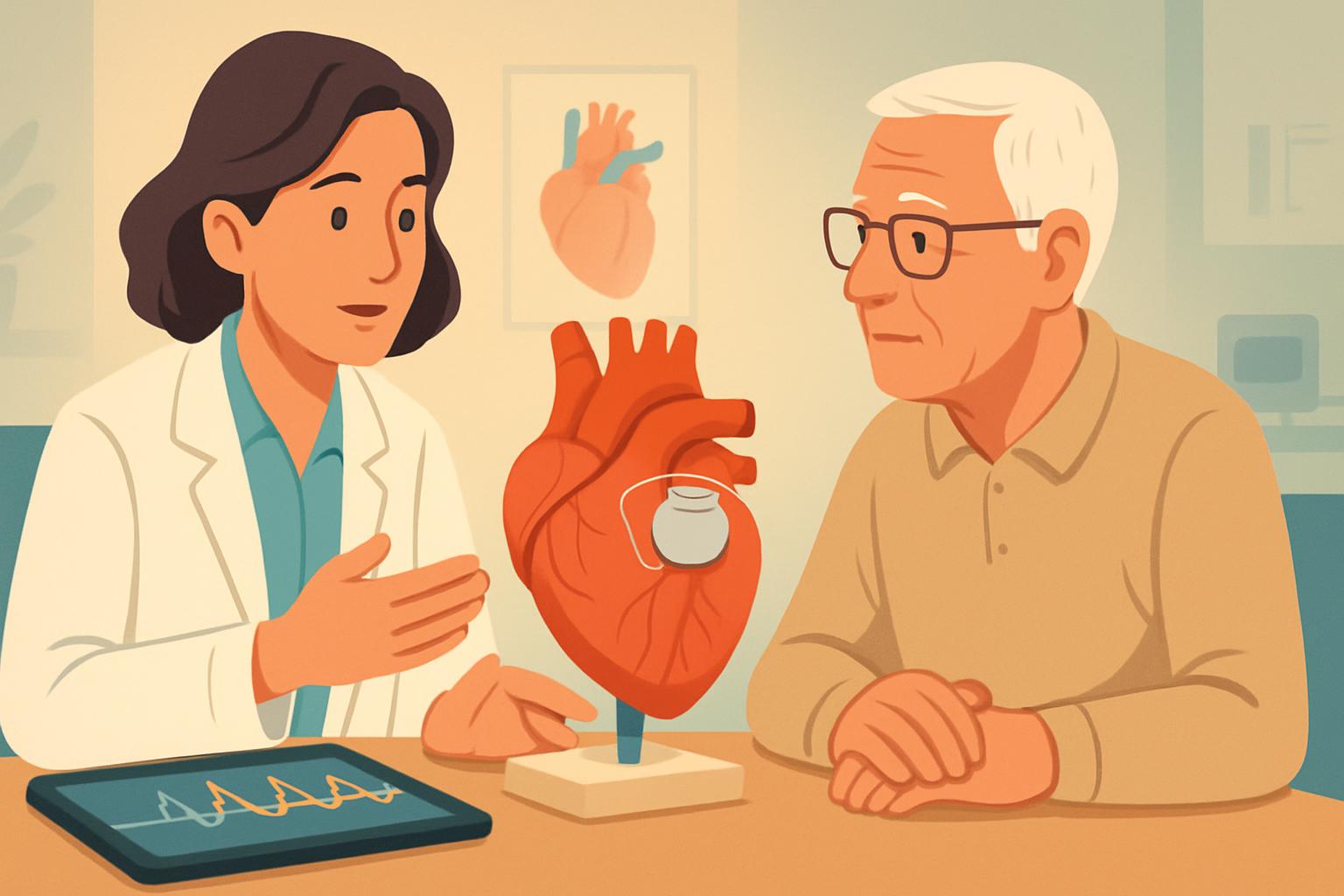
A pacemaker is a medical device designed to regulate the electrical activity of the heart by delivering timed electrical impulses to stimulate heartbeats. It is used to manage arrhythmias—conditions where the heart rhythm is irregular, too slow, or temporarily stops—ensuring the heart maintains an adequate rate and rhythm for effective blood circulation.
Origin and Background
The concept of the pacemaker arose from the need to treat bradycardia and other rhythm disorders that compromised cardiac function and patient survival. Advances in bioengineering and cardiology recognized that artificial electrical stimulation could replace or supplement the heart’s natural pacemaking activity when the sinoatrial node or conduction pathways fail. This therapeutic approach addressed the clinical limitations of pharmacological treatment for certain arrhythmias and provided a mechanical solution to improve cardiac output.
⚡ Key Takeaways
- A pacemaker controls heart rhythm by delivering timed electrical impulses to the cardiac muscle.
- Its primary application is to prevent slow or irregular heartbeats that can lead to symptoms or complications.
- Device limitations include dependency on battery life and potential for lead failure or inappropriate pacing.
- Recognizing pacemaker function is essential in clinical assessment and management of cardiac patients.
⚙️ How It Works
A pacemaker monitors the heart’s intrinsic electrical activity via implanted leads placed in one or more heart chambers. When the device detects an absent or delayed natural heartbeat beyond a preset interval, it generates a low-energy electrical pulse to trigger myocardial contraction. Most pacemakers consist of a pulse generator, containing the battery and circuitry, and leads that transmit impulses to the heart tissue. Devices can be programmed to adjust pacing rates based on physiological needs, using sensors that respond to motion or respiration. The implanted system continuously evaluates cardiac signals and initiates pacing as needed to maintain adequate rhythm and heart rate.
Types or Variations
Pacemakers are classified by the number of chambers they pace and sensing capability. Single-chamber pacemakers pace either the atrium or ventricle, while dual-chamber devices coordinate pacing between atrium and ventricle to preserve atrioventricular synchrony. Biventricular pacemakers, used in cardiac resynchronization therapy, stimulate both ventricles simultaneously to improve function in heart failure patients. Modes also differ, including demand pacing, which only delivers impulses when intrinsic beats are absent, versus fixed-rate pacing. Programming variations allow adaptation to individual patient cardiac physiology and clinical goals.
When It Is Used
Pacemakers are utilized in clinical scenarios involving symptomatic bradyarrhythmias such as sick sinus syndrome, atrioventricular block, or atrial fibrillation with slow ventricular response. Cardiologists and electrophysiologists assess patients for symptoms like syncope, fatigue, or heart failure resulting from inadequate heart rates. The device selection and implantation are integral parts of cardiac treatment planning, particularly when pharmacological therapy fails or is contraindicated. Pacemaker function is also evaluated during follow-up visits to ensure appropriate device performance and patient safety.
Example
A 68-year-old patient presents with recurrent dizziness and episodes of fainting. Electrocardiogram reveals a third-degree atrioventricular block causing a heart rate of 35 beats per minute. After evaluation, a dual-chamber pacemaker is implanted, programmed to maintain a minimum rate of 60 beats per minute by sensing intrinsic atrial and ventricular activity and pacing only when necessary. Subsequent follow-up shows symptom resolution and normalized heart rhythm during physical activity.
Why It Matters
Accurate understanding and application of pacemakers directly influence patient outcomes by preventing complications of bradycardia such as syncope, stroke, and heart failure. Proper device selection and programming optimize cardiac efficiency and quality of life. Misinterpretation or malfunction can lead to inadequate cardiac support, increased morbidity, or emergency situations. This knowledge informs clinical decision-making, device management, and risk assessment in cardiovascular care.
⚠️ Common Mistakes
- Confusing pacemaker types and their indications, leading to suboptimal device selection for patient needs.
- Assuming all slow heart rhythms require pacing without assessing for reversible causes or alternative treatments.
- Overlooking device programming parameters or failure modes during patient follow-up causing undetected pacing issues.
Deeper Insight
While pacemakers effectively restore heart rate, their artificial pacing may alter normal cardiac electrical activation patterns, potentially leading to long-term effects such as ventricular dyssynchrony or pacing-induced cardiomyopathy. Balancing the benefit of rate support against these risks requires careful device programming and consideration of newer pacing techniques that aim to preserve physiological conduction pathways, such as His-bundle or left bundle branch pacing.
Related Concepts
- Cardiac Resynchronization Therapy (CRT) – A specialized pacing approach using biventricular pacemakers to improve coordination in heart failure patients.
- Electrophysiology Study (EPS) – A diagnostic procedure evaluating the heart’s electrical conduction system to assess arrhythmia mechanisms and pacemaker need.
- Implantable Cardioverter Defibrillator (ICD) – A device that combines pacing with defibrillation to treat both slow and life-threatening fast arrhythmias.