Jaundice
A Radivive glossary entry. Scroll down for a plain-language definition and related terms in the same letter group.
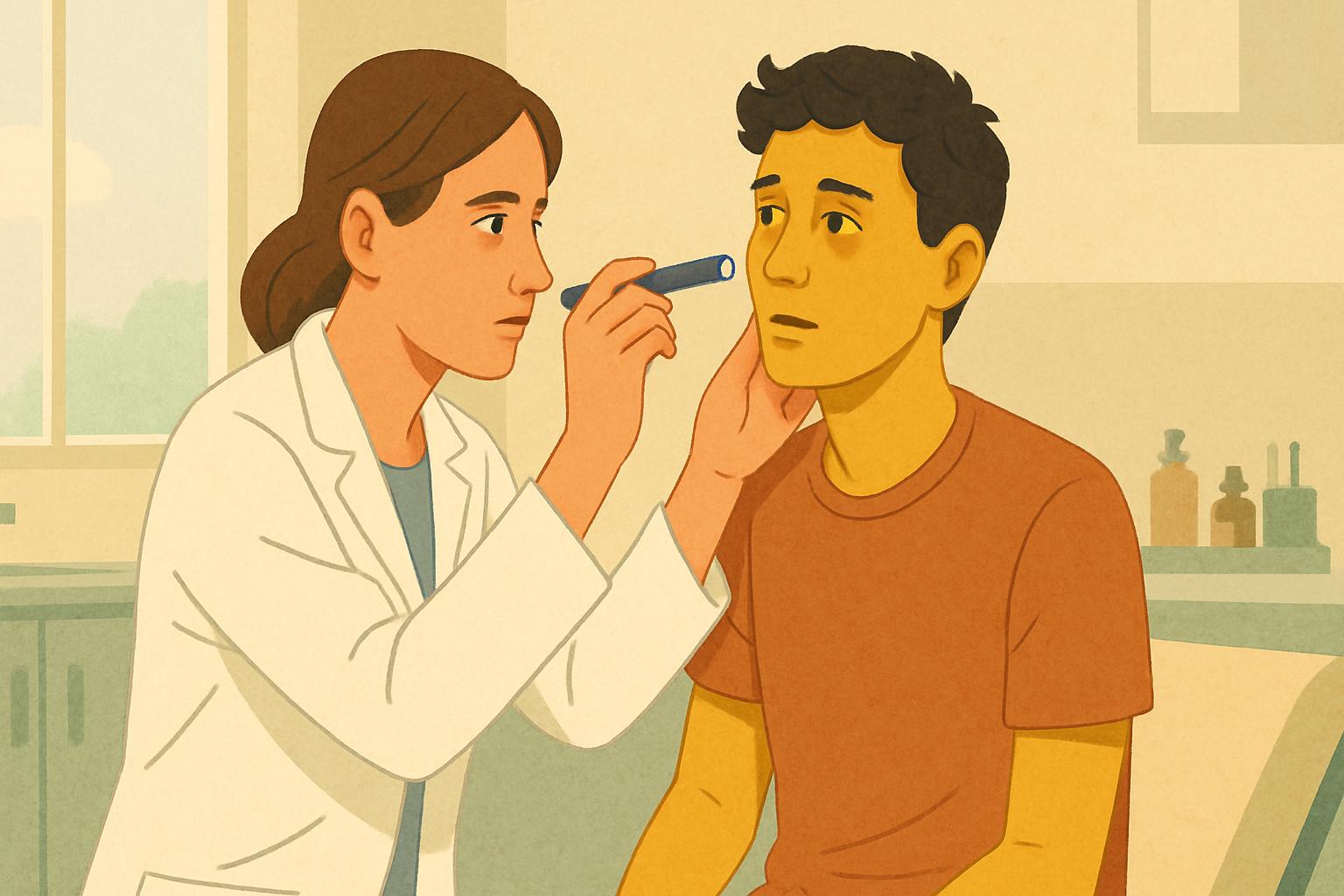
An illustration is not currently available for this term.
Definition
Definition
Jaundice is a clinical condition characterized by the yellowish discoloration of the skin, sclera (whites of the eyes), and mucous membranes caused by elevated levels of bilirubin in the bloodstream. Within the medical domain, it specifically indicates an imbalance in the production, metabolism, or excretion of bilirubin, distinguishing it from general yellow pigmentation due to other causes.
Origin and Background
The term arose from clinical observations linking visible yellow pigmentation to abnormalities in bilirubin metabolism, which became identifiable through advances in biochemical understanding of liver function and hemolysis. Recognizing jaundice enabled clinicians to detect underlying diseases affecting hepatic clearance, bile flow, or red blood cell breakdown, thus serving as a diagnostic marker in hepatology and hematology.
⚡ Key Takeaways
- Jaundice reflects an excess accumulation of bilirubin leading to visible yellow pigmentation in tissues.
- It signals potential disruptions in liver function, bile excretion, or hemolytic processes requiring clinical evaluation.
- Jaundice alone does not specify etiology and should not be conflated with all causes of yellow skin tone.
- It serves as an important indicator in diagnosing hepatobiliary, hematologic, or metabolic disorders.
⚙️ How It Works
Bilirubin, a breakdown product of hemoglobin from senescent red blood cells, circulates in the bloodstream initially in an unconjugated form. It is transported to the liver where it undergoes conjugation, making it water-soluble for biliary excretion. Jaundice results when there is increased bilirubin production (e.g., hemolysis), impaired hepatic uptake or conjugation (e.g., liver disease), or obstruction of bile flow (e.g., biliary obstruction). Elevated bilirubin levels deposit in tissues, causing the characteristic yellow discoloration that is clinically observable and measurable through serum bilirubin tests.
Types or Variations
Jaundice is typically classified into three main types based on the pathophysiological origin: pre-hepatic (due to excessive red blood cell destruction leading to unconjugated hyperbilirubinemia), hepatic (due to liver cell dysfunction affecting bilirubin conjugation or clearance), and post-hepatic or obstructive (due to bile duct obstruction causing buildup of conjugated bilirubin). Each type presents different biochemical profiles and clinical implications, guiding diagnostic and management strategies.
When It Is Used
The term is employed primarily in clinical medicine and diagnostics when evaluating patients presenting with yellow discoloration of skin or eyes. It guides healthcare professionals during physical examination, laboratory assessment, and imaging studies to establish the underlying hepatic, hematologic, or obstructive conditions. Jaundice is a crucial factor in differential diagnosis, treatment planning, and monitoring disease progression or response to therapy.
Example
A patient exhibiting yellow sclera and skin discoloration undergoes blood tests revealing a total serum bilirubin level of 4.5 mg/dL, predominantly unconjugated. Further evaluation identifies accelerated red blood cell breakdown due to hemolytic anemia. This clinical presentation and laboratory finding illustrate pre-hepatic jaundice resulting from excess bilirubin production overwhelming the liver’s conjugation capacity.
Why It Matters
Accurate recognition and understanding of jaundice enable timely identification of underlying pathological processes, which can range from benign transient conditions to life-threatening liver failure or malignant biliary obstruction. Misinterpretation or delayed diagnosis may lead to inadequate treatment, worsening patient outcomes, or avoidable complications. Moreover, distinguishing jaundice types informs appropriate resource allocation for diagnostic testing and therapeutic interventions.
⚠️ Common Mistakes
- Assuming all yellow skin discolorations represent jaundice without confirming elevated bilirubin levels.
- Confusing pre-hepatic, hepatic, and post-hepatic causes without biochemical and imaging correlation, leading to misdiagnosis.
- Overlooking conjugated versus unconjugated bilirubin fractions, which are critical for interpreting the underlying mechanism.
Deeper Insight
Although jaundice provides a visible clinical sign of bilirubin buildup, serum bilirubin levels do not always correlate with symptom severity or underlying disease impact. For example, certain hereditary conditions may cause mild, chronic jaundice with minimal liver dysfunction, whereas acute liver failure may present with significant biochemical abnormalities but only subtle physical signs initially. This discrepancy underlines the necessity of integrating clinical, laboratory, and imaging data rather than relying solely on visible jaundice for assessment.
Related Concepts
- Bilirubin Metabolism – The physiological process of bilirubin production, conjugation, and excretion directly linked to jaundice development.
- Hepatic Function Tests – Laboratory assessments including ALT, AST, and alkaline phosphatase that help differentiate hepatic causes of jaundice.
- Cholestasis – A condition related to impaired bile flow that often manifests with obstructive jaundice but encompasses broader hepatic and biliary dysfunction.